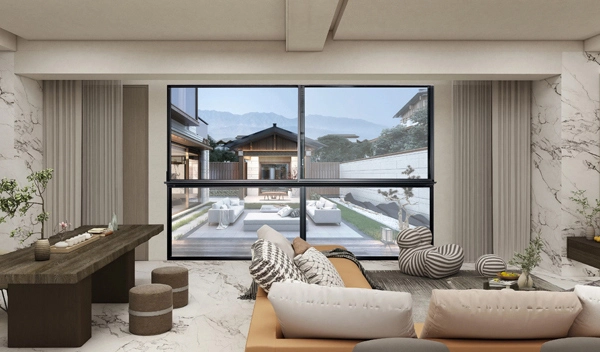
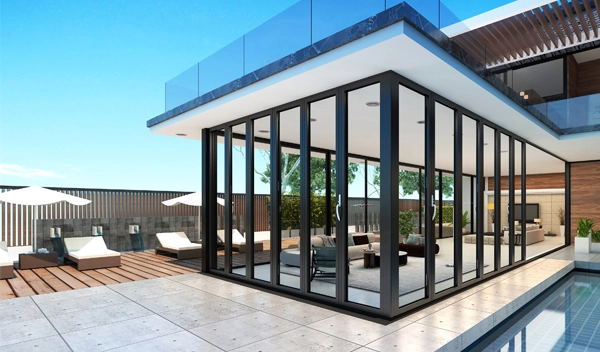
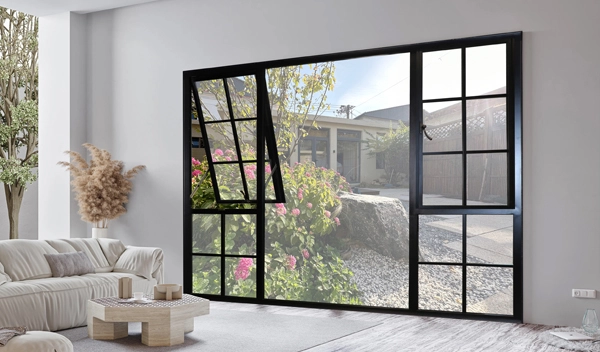
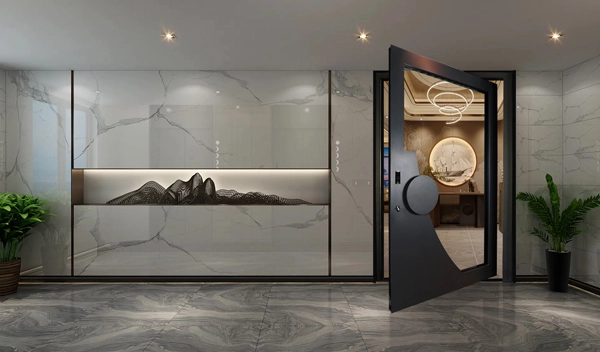
Modern architectural layouts are redefining the boundary between interior sanctuaries and the natural world. For project managers, luxury home builders, and B2B procurement specialists, executing a seamless transition requires structural systems that offer both expansive views and uncompromised weather resistance. High-performance folding glass walls have emerged as a premier creative choice for contemporary spaces, breaking through the physical limitations of traditional layouts.
Securing these specialized systems requires aligning your supply chain with top-tier aluminium bi-fold door manufacturers capable of balancing structural engineering with custom aesthetics. Sourcing directly from an established bi-folding door factory ensures that your project benefits from optimized material costs, direct engineering oversight, and elite manufacturing tolerances.
The global shift toward sustainable, energy-efficient architecture has fundamentally changed the criteria for selecting folding door systems. Traditional retrofits often sacrificed thermal performance for large glass surfaces, creating significant building energy liabilities. Today, developers look to specialized aluminium bi-fold door manufacturers to deliver systems that insulate against harsh climates while maximizing usable floor area.
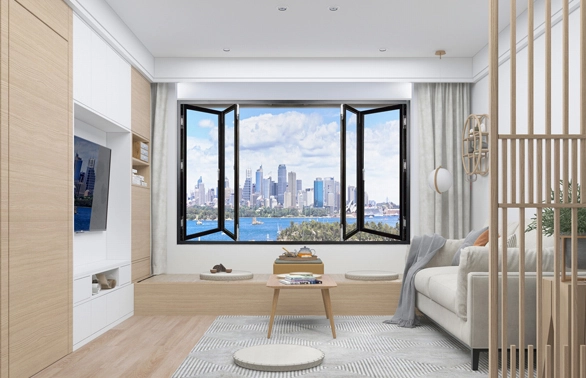
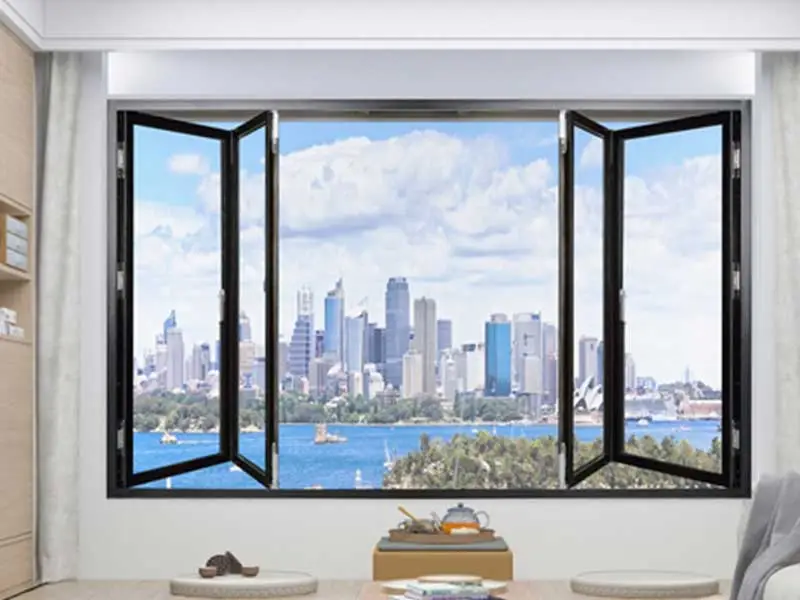
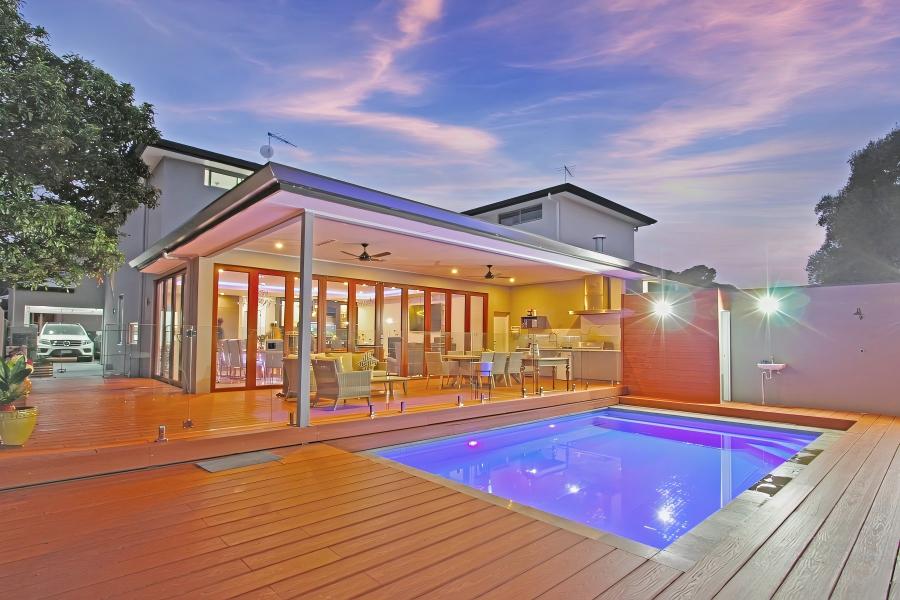
When these advanced door panels are fully opened, they fold back in an orderly manner to instantly expand the spatial view and seamlessly connect indoor and outdoor spaces. This integration adds an immediate sense of openness and luxury to high-end hospitality venues, commercial storefronts, and premium residences. When closed, a high-performance system tightens firmly against the structural frame to safeguard the building envelope, offering excellent sound isolation, moisture resistance, and advanced draft protection.
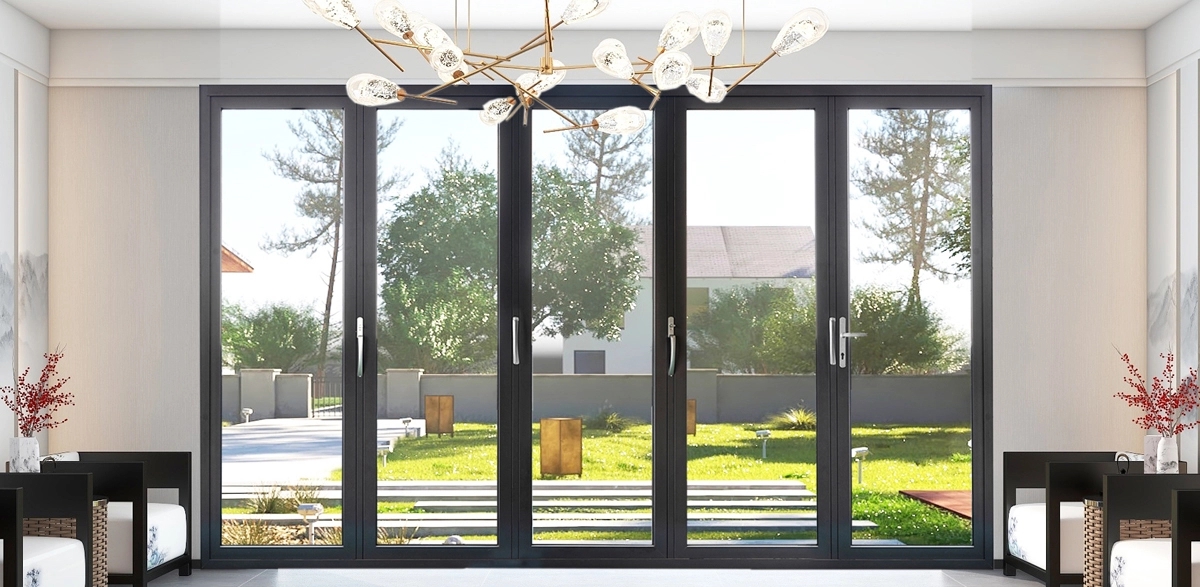
The longevity and performance of a folding door system are determined long before assembly, starting with raw material metallurgy. A premier bi-folding door factory does not rely on generic, low-grade metal extrusions. Instead, premium fabrication demands architectural-grade 6063-T5 aluminum alloy, precision-engineered with magnesium and silicon. This specific material composition undergoes rigorous heat tempering to unlock a superior strength-to-weight ratio.
Using 6063-T5 aluminum allows structural engineers to specify ultra-slim frame profiles that support massive, heavy double or triple-glazed units without warping, bowing, or sagging over decades of constant operation. Furthermore, a leading factory must offer advanced material options. For projects requiring the warmth of natural timber inside alongside weather-proof metal outside, the production line must accommodate high-end alu clad bifold doors. These composite systems fuse a low-maintenance exterior aluminum shield with a refined interior solid wood profile, meeting strict architectural preservation guidelines without compromising performance.
Selecting a manufacturing partner requires a data-driven evaluation of structural mechanics and energy metrics. One of the most common dilemmas faced during the planning phase is choosing between folding and sliding configurations. To make an informed procurement decision, developers must evaluate how each system handles structural openings, wind pressure, and spatial constraints.
The ideal choice depends entirely on the design goals of your development. If your project features an expansive opening facing a deck or patio and your priority is to remove the wall entirely for entertaining, bifold doors are the gold standard. If interior or exterior clearance is highly restricted, or if you prioritize narrow, uninterrupted vertical sightlines when the glass remains closed, a sliding configuration is more practical.
To assist your engineering team in selecting the appropriate configuration, the structural differences are outlined in the comparison table below:
| Performance & Design Variable | Premium Aluminium Bifold Doors | Commercial Sliding Doors |
|---|---|---|
| Maximum Opening Percentage | Delivers 90% to 95% full clear opening | Restricted to 50% to 65% due to fixed overlapping sashes |
| Spatial Requirement | Requires dedicated exterior or interior stacking clearance | Operates entirely within its own track, saving floor space |
| Primary Structural Benefit | Completely eliminates structural barriers between zones | Offers fewer vertical frame sightlines when fully closed |
| Core Material Composition | High-strength 6063-T5 aluminum with PA66 insulation | Heavy-duty architectural aluminum extrusion tracks |
| Cladding Versatility | Readily compatible with premium alu clad bifold doors | Generally restricted to standard solid aluminum frames |
Beyond the layout choice, always verify the product's thermal values, specifically the U-Value and the Solar Heat Gain Coefficient (SHGC). A lower U-value indicates superior thermal resistance, proving that the manufacturer utilizes verified thermal break technology rather than solid, uninsulated aluminum profiles. You can explore our complete breakdown of structural configurations on our products page.
A commercial-grade factory must possess the engineering flexibility to adapt standard configurations to complex architectural blueprints. Elite customisation is anchored by advanced thermal structures and specialized hardware details. Premium bifold systems integrate a multi-chamber PA66 polyamide thermal insulation strip directly between the interior and exterior aluminum profiles. This structural barrier stops heat conduction, keeping interior zones comfortable regardless of extreme outdoor temperatures.
True architectural customization also introduces innovative structural variations, such as a postless corner design that removes the fixed vertical corner column completely to allow completely uninterrupted views when the doors are retracted. For flawless daily operation, the system should feature a multi-chamber isobaric sealing structure combined with EPDM foam composite seals to achieve three layers of airtight protection. High-end customisation also integrates concealed heavy-duty hinges for a minimalist aesthetic, reinforced middle mullions for enhanced wind load resistance, built-in anti-pinch safety mechanisms, and custom-engineered drip boards that prevent water pooling during severe rainstorms. To configure a custom setup for your ongoing development, you can submit structural dimensions directly via our contact page.
The smooth operation of a massive multi-panel folding door relies entirely on its bottom-rolling structural system, which ensures the heavy glass payload rests securely on the floor track rather than stressing the header beam.
Utilizing high-precision European production equipment, our automated CNC milling centers cut profiles with sub-millimeter precision for flawless 45-degree mitered corners. The upper frame integrates a specialized spring-damped sliding wheel to absorb operational shock, while the lower mechanism uses a support-type multi-roller design paired with stainless steel tracks and TPE3 composite low-friction seals. This precision engineering allows our systems to deliver an impressive wind classification up to N6 / C3, superior water tightness, and up to 46dB acoustic performance built for a 30-year design life.
Founded in 1992, JOLONG brings over 33 years of specialized engineering excellence to global door and window supply. As an AGWA Gold Member and Member of the Property Council of Australia, we operate a dual manufacturing network. This includes a 50,000㎡ digital intelligent production base yielding a 300,000㎡ annual output, alongside a planned 6,000㎡ Australian fabrication facility to guarantee factory-direct costs and reliable commercial lead times.
Sourcing directly from our vertically integrated bi folding door factory allows you to customize architectural elements, from flush zero-thresholds to heavy-duty coastal tracks. Every system fully complies with AS/NZS 2047, AS 4055, AS/NZS 1288, and NCC standards, is WERS rated, and our BAL-40 bushfire systems are undergoing active AS 1530.1 testing.
To explore our 40+ system solutions, clients can visit our 3,500㎡ flagship showroom in Adelaide (St. Marys) or contact our local service centres in Hawthorn (VIC), Granville (NSW), Underwood (QLD), and Chicago (USA) for seamless project delivery backed by a 7-year structural warranty.
Maximizing the value and efficiency of architectural openings requires moving past generic retail products and investing in factory-direct engineering. By understanding the metallurgy of 6063-T5 aluminum, enforcing strict multi-chamber PA66 thermal insulation standards, and choosing heavy-duty bottom-rolling tracks over top-hung variants, procurement teams secure long-term structural durability. Partnering with a vertically integrated manufacturer that controls the entire automated extrusion, coating, and assembly cycle ensures your project is delivered on time, within budget, and to exact architectural standards.
Casement windows lock tightly against their frames when closed, creating a firm seal that provides superior airtightness, water resistance, and acoustic insulation compared to sliding designs.
Yes, custom windows can be precision-engineered to match the precise structural openings of existing buildings, making them ideal for historical retrofits and energy efficiency upgrades.
Aluminum is naturally conductive. A thermal break places an insulated barrier inside the frame profile, preventing external temperatures from transferring indoors and dramatically lowering building energy costs.
Complex profiles like slimline or triple-frame configurations require advanced engineering and specialized handling, making them a higher initial investment than simple single-frame windows.
JOLONG maintains dedicated technical offices in Australia and the United States to ensure all fabricated window systems comply directly with regional structural and energy performance standards.