When a large entrance door moves effortlessly with just a gentle push, the experience often feels simple. However, behind that smooth movement is a carefully engineered balance of weight control, rotation mechanics, and structural support. Modern architectural doors are no longer judged only by how they look; their ability to handle size, weight, and frequent operation has become a key measure of design quality.
This is why the engineering behind a pivot door system has attracted increasing attention in contemporary architecture. Unlike traditional hinged doors that rely on side-mounted hinges, pivot systems redistribute the load through strategically positioned rotation points, allowing larger door panels to move with greater stability and less operating effort.
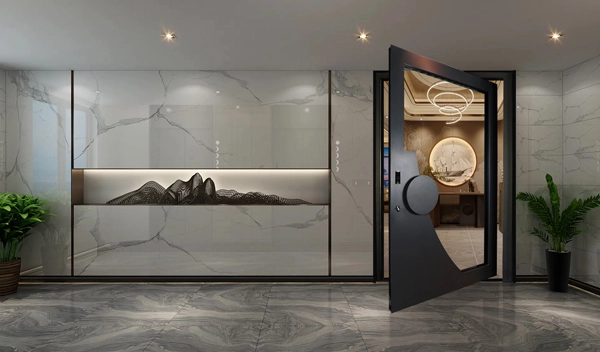
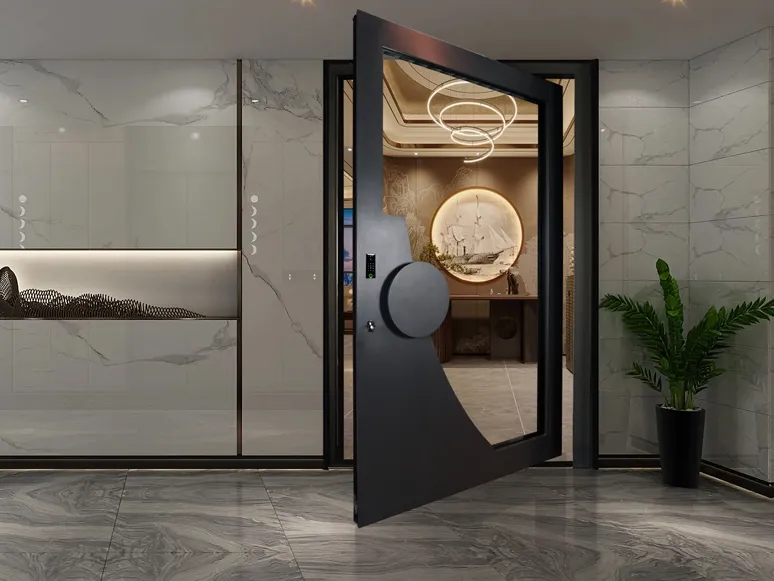
Among different pivot configurations, the off center pivot door offers architects greater freedom in balancing visual proportions and mechanical performance. By shifting the pivot axis away from the center of the door panel, this design creates a smoother opening experience while supporting oversized entrances and modern minimalist designs. For projects requiring carefully engineered door and window solutions, Jolong’s door and window solutions provide practical references for different architectural applications.
The working principle of a pivot door is fundamentally different from a traditional hinged door. Instead of relying on hinges installed along one vertical edge, a pivot system uses dedicated pivot hardware positioned at the top and bottom of the door panel. These pivot points create a controlled rotation axis that allows the door to swing smoothly while distributing the load more effectively.
In a conventional hinged door, most of the structural force is concentrated around the side hinges. As door panels become larger or heavier, this concentrated load can increase stress on the hardware and frame. A pivot system changes this force distribution by transferring the weight through the pivot mechanism, creating a more balanced operating structure.
An off center pivot door uses a rotation point positioned away from the exact center of the door panel. This configuration creates an intentional offset between the opening and closing sections of the door. The result is a more controlled movement pattern that can support wider openings while maintaining a comfortable operating experience.
The engineering performance of a pivot door depends on the coordination of multiple components, including the pivot hinges, supporting hardware, frame structure, and adjustment systems. When these elements are precisely designed and installed, the door can achieve smooth rotation, reliable alignment, and long-term operational stability.
This mechanical advantage is one reason pivot systems are increasingly used in luxury residential entrances, commercial buildings, hospitality spaces, and modern architectural projects where both appearance and performance are important.
| Performance Factor | Traditional Hinged Door | Pivot Door System |
|---|---|---|
| Rotation method | Rotates around side-mounted hinges | Rotates around dedicated pivot points |
| Weight distribution | Load concentrated near the hinge side | Load transferred through top and bottom pivot hardware |
| Large door applications | More challenging as size and weight increase | Designed to support larger architectural panels |
| Operating experience | May require greater effort for oversized doors | Provides smoother and more balanced movement |
| Design flexibility | Limited by conventional hinge placement | Allows more creative entrance designs |
The performance of any pivot door depends heavily on the quality and engineering of its hardware system. While the door panel creates the visual impact, the pivot hardware determines how effectively the entire structure moves and supports its own weight.
Unlike standard door hinges, pivot hardware must manage vertical loads while allowing controlled rotation. High-quality systems typically include precision pivot mechanisms, reinforced load-bearing components, and adjustment features that help maintain alignment during long-term operation.
For an off center pivot door, hardware design becomes even more critical because the offset rotation point creates different force patterns compared with a centrally positioned pivot. The hardware must balance these forces while maintaining smooth movement and preventing unnecessary stress on the frame.
Properly engineered pivot hardware helps achieve several performance advantages. It reduces friction during operation, supports accurate door positioning, and allows installers to make adjustments after installation. These adjustment capabilities are particularly important for large architectural doors, where even small alignment changes can affect the overall user experience.
The selection of suitable pivot hardware should always consider factors such as door dimensions, material weight, usage frequency, and environmental conditions. A well-matched hardware system ensures that the pivot door continues to operate smoothly while maintaining structural reliability throughout its service life.
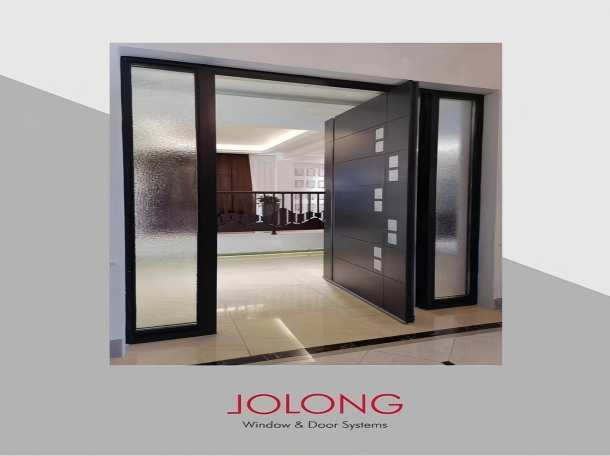
Weight distribution is one of the most important engineering considerations in designing a stable pivot door. Large architectural doors often use heavy materials such as glass, metal, or solid wood, meaning the door system must manage significant forces during opening and closing.
Traditional hinged doors support their weight from one side, which can create increased pressure on hinge locations. A pivot system distributes the load through a vertical rotation axis, allowing the structure to handle larger panels with improved balance.
The design of an off center pivot door provides additional flexibility because the pivot location can influence how the door feels during operation. By positioning the pivot point away from the center, engineers can create a balance between visual design requirements and mechanical performance.
A well-designed offset pivot system can reduce the perceived weight of a large door, making movement smoother and more controlled. This is especially valuable in projects where oversized entrances are required but user comfort remains a priority.
Achieving proper balance requires careful consideration of door height, width, thickness, material selection, hardware capacity, and installation accuracy. When these elements are properly coordinated, a pivot door can provide both impressive visual impact and reliable everyday performance.
The long-term performance of a pivot door depends on more than the rotation mechanism itself. The overall structural design of the door panel, frame, supporting materials, and installation environment all influence stability, durability, and operating reliability.
One of the most important factors is the relationship between the door size and the supporting structure. Large pivot doors often create higher loads because of their increased height, width, and material weight. A properly engineered system must ensure that the frame and pivot hardware can handle these forces without affecting smooth operation.
Material selection also plays an important role in durability. Different door materials have different weight characteristics, expansion behaviors, and structural requirements. For example, oversized glass panels require precise support to maintain alignment, while solid materials may require stronger load-bearing solutions.
The frame structure is another key factor. A stable frame provides the foundation for consistent pivot movement by maintaining accurate positioning of the upper and lower pivot points. Any deformation or misalignment in the supporting structure may influence the performance of the entire system.
For an off center pivot door, structural balance becomes especially important because the offset rotation point changes the way forces are distributed across the door. The design must account for these forces to ensure smooth operation while preventing excessive stress on individual components.
A well-engineered pivot door system combines strong materials, accurate structural calculations, and suitable hardware selection. This approach allows modern architectural doors to achieve both impressive visual appearance and dependable long-term performance.
Even the most advanced pivot door system cannot perform properly without precise installation. Unlike standard doors, pivot systems rely on accurate positioning between multiple components, meaning installation quality directly affects movement, alignment, and service life.
The upper and lower pivot points must be installed with accurate vertical alignment to ensure smooth rotation. Small deviations can create uneven forces, increased friction, or difficulty during opening and closing. This is particularly important for large-format doors, where minor installation errors can become more noticeable.
Professional installation also ensures that the frame, hardware, and door panel work together as a complete system. Proper adjustment allows the door to achieve the intended balance, preventing issues such as uneven gaps, unnecessary resistance, or premature component wear.
For an off center pivot door, installation precision is even more critical because the offset pivot position determines how the door weight is distributed during movement. Accurate alignment helps maintain the designed balance and ensures that the door operates smoothly over time.
Choosing an experienced supplier and installation partner can significantly improve project outcomes. When selecting a suitable system, factors such as application requirements, door specifications, and installation conditions should all be evaluated carefully. For professional guidance on pivot door solutions, Jolong’s window and door specialists can provide further information based on specific project requirements.
Modern architecture increasingly focuses on creating spaces that combine functionality, simplicity, and visual impact. This trend has increased demand for advanced pivot door systems that can support larger openings while maintaining smooth operation and structural reliability.
Unlike conventional doors that are limited by traditional hinge placement, pivot systems provide greater design flexibility. The rotation point can be positioned according to architectural requirements, allowing designers to create wider entrances, cleaner visual lines, and more dramatic transitions between indoor and outdoor spaces.
The off center pivot door is particularly valuable in contemporary architectural projects because it offers a balance between aesthetics and engineering performance. The offset design creates a unique movement experience while supporting modern minimalist concepts that emphasize large surfaces and simple geometric forms.
Jolong provides door and window solutions designed to meet different architectural needs, combining practical engineering considerations with modern design expectations. By understanding project requirements such as size, material selection, and application environment, customers can choose solutions that deliver both appearance and reliable performance.
As buildings continue to evolve toward more personalized and experience-focused designs, pivot systems are becoming an important architectural element rather than simply a functional component. Their ability to combine engineering precision with creative freedom makes them suitable for high-end residential projects, commercial buildings, hospitality spaces, and other modern developments.
The performance of a modern pivot door is the result of careful engineering rather than simple hardware selection. From rotation mechanics and weight distribution to structural design and installation accuracy, every element contributes to smooth operation and long-term stability.
Compared with traditional hinged doors, an off center pivot door provides greater flexibility in managing large door panels while creating a refined opening experience. By redistributing loads and improving movement control, pivot systems allow architects to achieve larger entrances without compromising reliability.
For architects, developers, and property owners seeking a combination of design freedom and dependable performance, advanced pivot door systems offer an effective solution for modern buildings. With proper engineering, suitable hardware, and professional installation, these systems can deliver lasting functionality while enhancing architectural expression.
A pivot door is a door system that rotates on pivot points installed at the top and bottom of the panel instead of using traditional side-mounted hinges.
An off center pivot door has a rotation axis positioned away from the center of the door panel, creating different balance characteristics and design possibilities.
Yes. A properly engineered pivot door system can support larger panels by distributing weight through dedicated pivot hardware and structural components.
Pivot hardware controls rotation, supports the door load, maintains alignment, and helps ensure smooth operation throughout the door’s service life.
Yes. Precision installation is important because correct alignment directly affects movement, stability, and long-term reliability.
Architects choose pivot systems because they provide larger design possibilities, smoother operation, and a modern appearance suitable for contemporary buildings.