In 2026, premium residential and mixed-use design is shifting toward “permanent materials”—components chosen to last as long as the structure itself, not just the next renovation cycle. That’s why the debate around doors has evolved: while uPVC remains common for budget-driven builds, aluminium hinged doors have become the modern benchmark for slim aesthetics, structural stability, and long-term performance.
At Jolong, we approach this as a consultative decision, not a catalogue pitch. Drawing on precision manufacturing experience and real-world performance priorities (wind load, thermal design, hardware fatigue, and lifecycle cost), this guide breaks down what matters most—so you can choose confidently.
If you’ve ever dealt with a door that suddenly starts sticking in summer or misaligning after a cold snap, you’ve experienced the main structural drawback of uPVC: higher expansion/contraction and long-term profile movement under temperature swings and load.
Hinged doors don’t just open and close—they carry continuous gravitational load on hinges, and they experience repeated latch/lock forces. When a frame material shifts or creeps, you see:
locks that start to catch or misalign
seals that compress unevenly
sashes that sag (especially on larger glass panels)
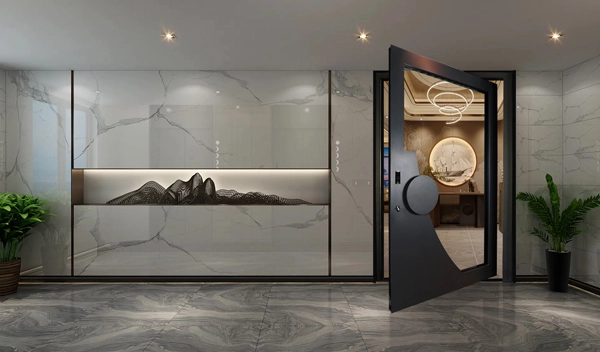
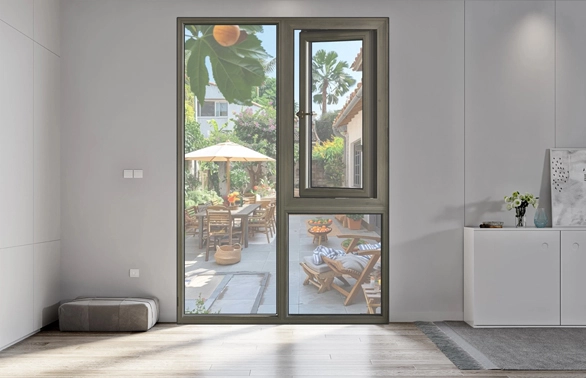
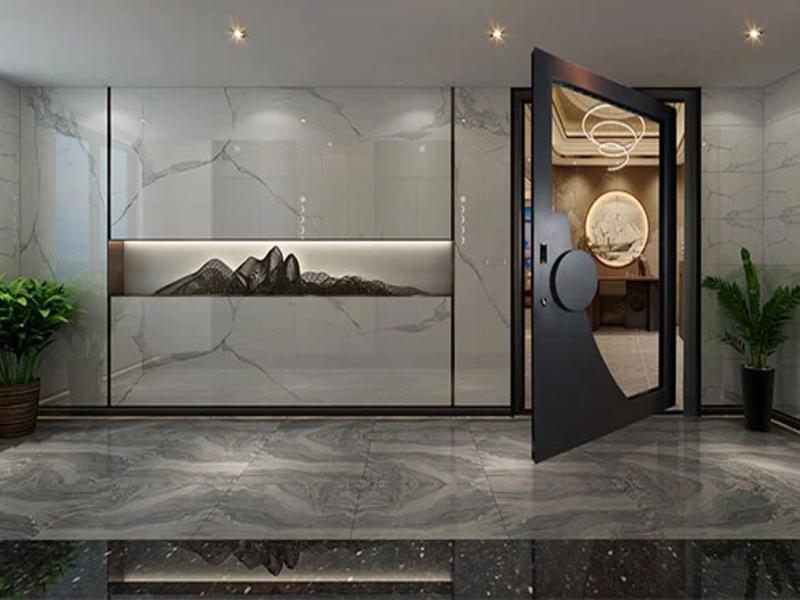
A quality aluminium hinged glass door can be engineered with a high strength-to-weight ratio that keeps geometry stable across seasons. For modern performance doors, manufacturers commonly use 6063-T5 aluminium alloy, valued for its balance of strength, corrosion resistance, and extrusion quality—ideal for tight tolerances and consistent wall thickness.If you’re exploring specs and configurations, see Jolong’s modern aluminium hinged glass door options designed for long-term alignment and smooth operation.

Design expectations in 2026 are clear: more daylight, cleaner lines, and fewer visual interruptions. That’s where aluminium tends to dominate.
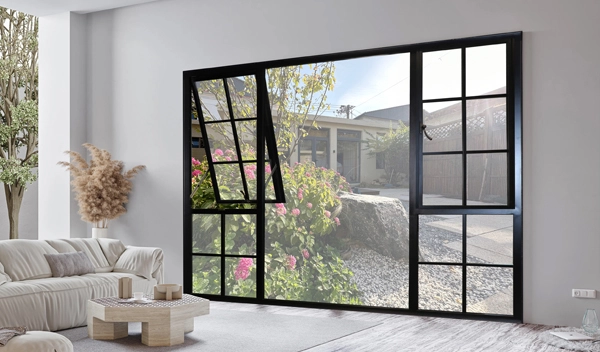
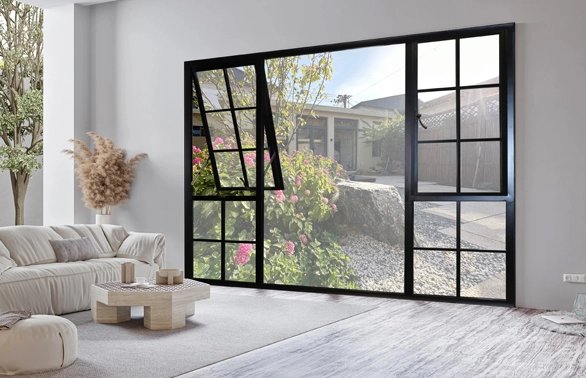
Because aluminium is structurally rigid, it can support narrow sightlines while maintaining wind resistance and hinge stability. The practical result is a more “architectural glass door” look:
more glass area (higher visible light)
less frame bulk at the perimeter
sharper corner detailing and tighter reveals
Architects and homeowners are increasingly selecting textured powder-coated finishes—including sand-grain styles—to add depth without visual clutter. Aluminium accepts high-quality powder coating and advanced surface treatments (including fluorocarbon spraying in some exterior-grade specifications), enabling durable color and finish consistency that uPVC typically can’t authentically replicate.
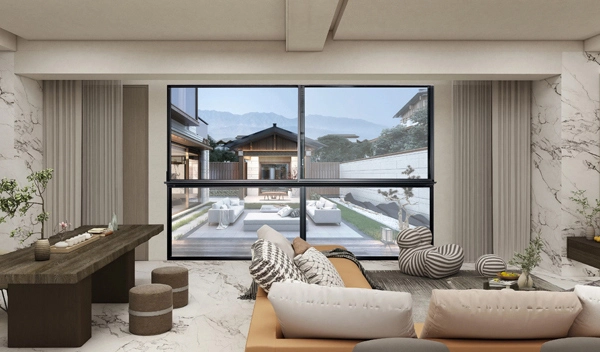
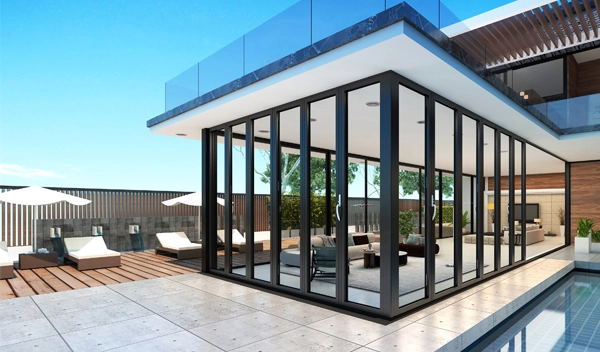
Thin-profile aluminium hinged doors integrate cleanly with modern patios, courtyards, and garden transitions. By contrast, bulkier uPVC profiles can visually “block” that indoor–outdoor continuity—especially when paired with large-format glazing.
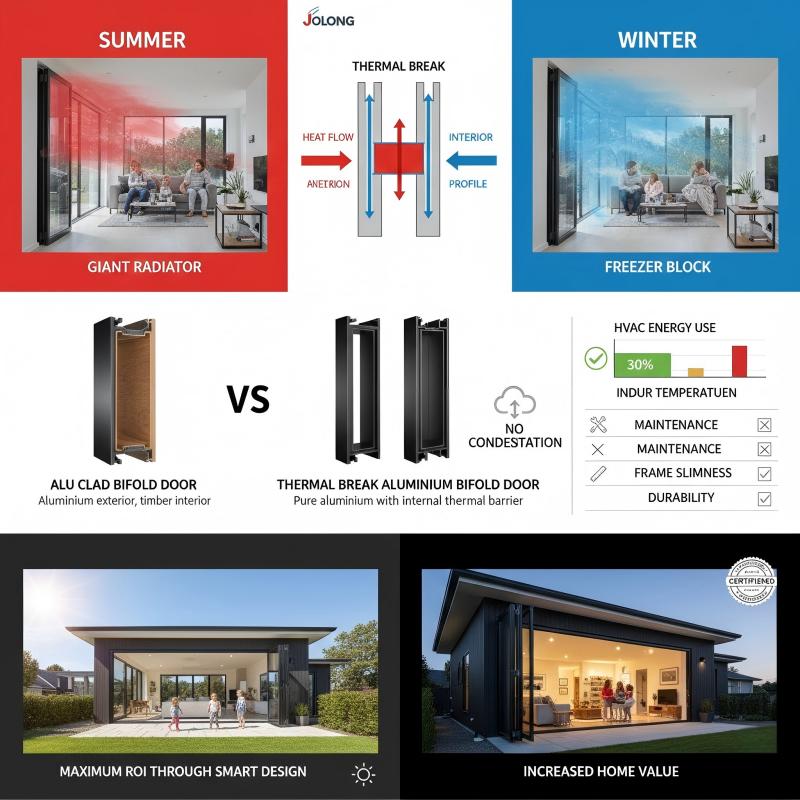
The “aluminium is cold” belief still shows up in buyer conversations—but in 2026, it’s usually based on older, non-thermally-broken frames, not modern systems.
Modern aluminium doors use a polyamide thermal break (often PA66) to separate interior and exterior aluminium sections, reducing conductive heat transfer. Combined with:
multi-chamber frame design
high-performance gaskets
insulated glazing units (IGUs)
…aluminium can compete strongly on comfort and energy performance.
When comparing options, ask for:
U-value (overall door set U-value, not just glass)
IGU build: Argon-filled IGUs can improve thermal performance
air/water tightness approach: EPDM weather stripping is a common high-performance sealing entity worth confirming
Jolong’s multi-chamber designs are engineered to balance thermal efficiency with wind resistance, which is where aluminium often outperforms uPVC in exposed sites.
Security isn’t only about the lock—it’s about whether the frame can hold alignment and keep hardware functioning precisely under repeated use.
Hinged doors face more sag pressure than sliders because the sash weight is concentrated on hinge points. If the material flexes, you can get:
latch drift
premature gasket wear
hardware stress and loosening over time
Because aluminium is rigid, it can support:
triple glazing (where specified)
robust multi-point systems
premium European hardware packages (commonly recognized names include Giesse and HOPPE, depending on spec)
For modern security design, look for entities like:
concealed hinges (clean aesthetics + protected hinge hardware)
bi-directional locking and multi-point engagement for improved resistance and tighter seal compression consistency
Upfront cost is only one part of ROI. In real projects, the question becomes: How long will it look good, seal well, and operate smoothly—without costly adjustments or replacement?
uPVC doors: often chosen for lower initial cost; may show earlier aging signs like color change, brittleness, and hardware/alignment issues over time (commonly discussed as a ~10–15 year performance window depending on quality, climate, and use).
quality aluminium hinged doors: often specified for longevity; with proper coating, gaskets, and hardware, it’s realistic to target a ~30–40 year service life in many applications.
| Feature | Aluminium Hinged Door | uPVC Door |
|---|---|---|
| Structural stability | High rigidity; resists sag/warp under load | More movement over time; can shift with temperature |
| Sightlines | Narrow sightlines; more glass, less frame | Typically bulkier profiles |
| Finish options | Powder coating, textures (e.g., sand-grain), advanced exterior finishes | Limited authentic texture/finish depth |
| Thermal performance | Strong with PA66 thermal breaks, multi-chamber design, quality IGUs | Often good thermal baseline; varies by profile system |
| Wind resistance | Excellent when engineered for exposure | Can be more limited for large/heavy sashes |
| Hardware compatibility | Supports heavier glazing + high-end multi-point hardware | Hardware performance depends heavily on reinforcement and profile stability |
| Long-term ROI | Designed for long service life and maintained alignment | Lower upfront cost; may need earlier replacement/adjustment |
Yes—modern aluminium systems commonly use polyamide thermal breaks (PA66), multi-chamber frames, and high-performance glazing (often with argon-filled IGUs) to achieve strong thermal performance. The key is evaluating the whole-door U-value, not just the glass.
Aluminium doesn’t rust like steel. It forms a protective oxide layer naturally, and quality powder coating (or exterior-grade surface treatments) adds further corrosion resistance—especially important for coastal or humid environments.
Both can be secure with the right lock system, but aluminium’s rigidity helps maintain hinge and lock alignment over time—critical for hinged doors that carry constant load. Pair aluminium with a multi-point locking system, robust cylinders, and proven hardware for best results.
If you’re solving for immediate budget constraints or a short-term property plan, uPVC can still serve a purpose. But if your priority is a door that stays straight, secure, quiet, and visually refined for decades—2026’s durability and sustainability expectations point clearly toward aluminium.Don’t settle for a door that yellows over time. Choose the strength and clarity of a custom-engineered aluminium hinged doors solution.