Architectural demands are shifting rapidly toward high-performance, carbon-neutral building envelopes. For project managers, architects, and B2B procurement teams, selecting the right window configuration is no longer just an aesthetic choice—it is an elements-driven structural decision. Aluminum casement windows have emerged as a premier choice for modern developments due to their exceptional structural integrity, superior thermal efficiency, and design flexibility.
Before launching a large-scale order, understanding the interplay between material engineering, design variations, and manufacturing capabilities is essential. This guide outlines the critical variables required to optimize your next commercial or high-end residential installation.
An aluminum casement window is a sash configuration hinged vertically on one side, swinging outward or inward like a door. Unlike traditional sliding variants, casement systems press firmly against their structural frames when closed, creating a continuous perimeter seal. This mechanical compression makes them exceptionally proficient at preventing air infiltration and water ingress, driving down building energy consumption.
For global procurement managers, partnering with an experienced aluminium casement window manufacturer unlocks deep engineering advantages. Modern aluminum profiles utilize advanced thermal break technology, which replaces the conductive solid metal frame with an insulated polyamide barrier. This design controls thermal transfer, allowing large-scale glazing installations to meet stringent local energy codes in strict markets like Australia and the United States. Furthermore, the inherently high strength-to-weight ratio of aluminum allows for narrower frame sightlines without sacrificing structural stability under high wind loads.
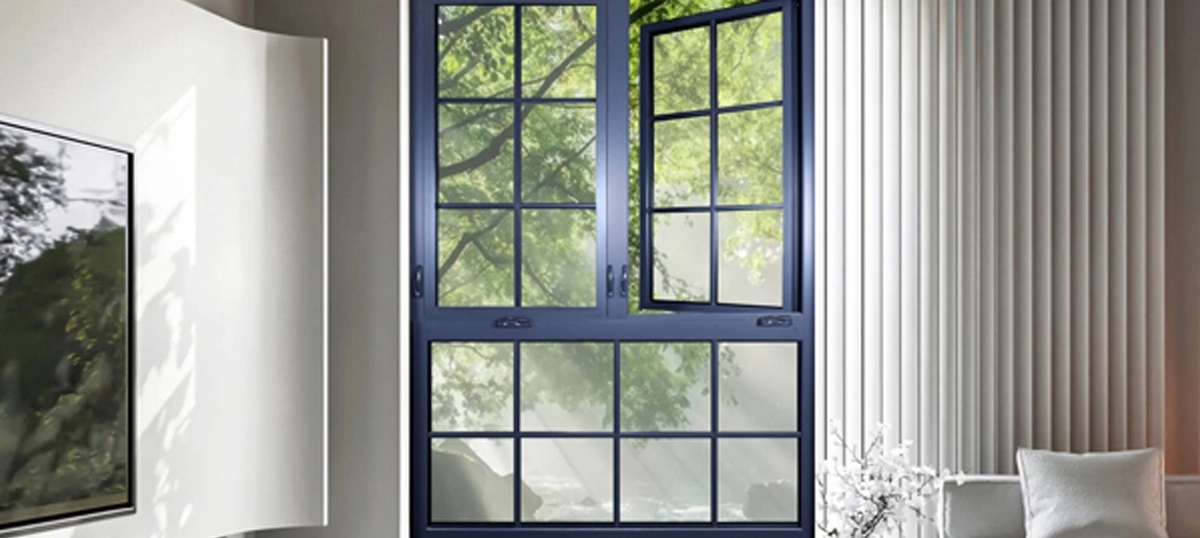
Selecting the ideal window configuration requires balancing spatial constraints with performance expectations. Different aluminum casement window types serve distinct functional roles across various architectural layouts.
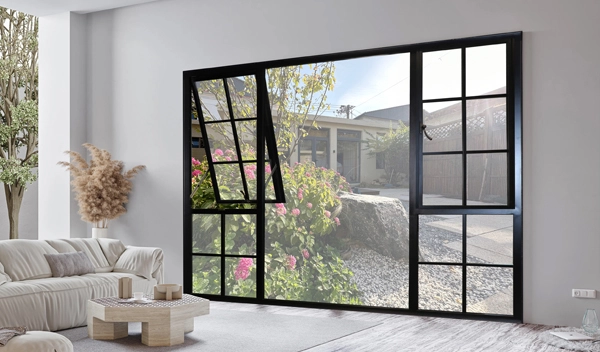
Outward Opening Casements: Hinged on the side to swing completely outward, these windows capture passing cross-breezes and direct maximum airflow into a space.
French Casements (Double Frame): Featuring two adjacent sashes that meet in the center without a central vertical mullion, offering completely unobstructed panoramic views.
Single Frame Casements: Consisting of a single functional sash within one perimeter frame, this is the most streamlined and cost-effective option for compact spaces.
Top-Hung Casements: Hinged at the top to open outward from the bottom, this design functions as a protective canopy that keeps out rainwater while allowing continuous ventilation.
Triple Frame Casements: Engineered for expansive architectural openings, this setup integrates three distinct panels to maximize natural light and support heavy, high-performance glazing.
Slimline Casements: Featuring ultra-narrow, minimalist profiles, slimline models maximize the visible glass surface area to complement contemporary architectural aesthetics.
A successful commercial installation requires mapping specific product types to the unique environmental and functional pressures of the job site. The following matrix outlines how to leverage different window configurations based on your specific project scenario:
| Project Scenario / Environment | Recommended Casement Type | Key Customization Focus | Performance Priority |
|---|---|---|---|
| High-Rise Facades & Coastal Zones | Top-Hung Casements | Heavy-duty friction stays, anti-corrosive powder coatings | Wind load resistance & waterproofing |
| Luxury Residential & Hospitality | French / Triple Frame Casements | Large-scale profiles, premium multi-point locking systems | Unobstructed panoramic views & high-end aesthetics |
| Contemporary Corporate Offices | Slimline Casements | Ultra-narrow sightlines, solar-control smart glazing | Maximum daylight harvesting & minimalist look |
| High-Traffic Commercial Lobbies | Outward Opening Casements | Heavy-duty commercial hinges, automated operators | Maximum ventilation efficiency & ease of access |
| High-Density Urban Apartments | Triple Frame Casements | Multi-cavity thermal breaks, acoustic laminated glass | Advanced noise reduction & strict thermal compliance |
| Budget-Conscious / Compact Spaces | Single Frame Casements | Streamlined hardware, standardized frame profiles | Cost efficiency & low maintenance overhead |
When designing for challenging climates where thermal performance is paramount, ensuring that your aluminium casement window manufacturer integrates advanced multi-cavity thermal breaks and low-emissivity (Low-E) insulated glass units will drastically lower overall HVAC overhead. You can review our extensive line of custom options on our product page.
Navigating the financial layout of custom windows requires looking beyond the initial material cost per square meter. Total project expenditure is dictated by raw material grades, hardware specifications, structural complexity, and logistics.
Profile and Thermal Upgrades: Standard non-thermal profiles represent the baseline economy tier. Transitioning to high-performance, energy-saving thermal break configurations increases raw material costs but provides substantial long-term value through energy compliance and building efficiency.
Glazing Configurations: Standard double glazing serves as the baseline for modern commercial projects. Upgrading to specialized acoustic laminates, reflective solar-control coatings, or triple-glazed units for severe climates drives up initial fabrication costs but handles specific environmental challenges effectively.
Hardware and Mechanisms: Heavy-duty friction stays, multi-point locking systems, and specialized operators account for a notable portion of the unit cost. Specifying premium, corrosion-resistant hardware ensures smooth operational lifespans and reduces post-installation maintenance liabilities.
Scale and Logistics: Manufacturing custom shapes or non-standard frame sizes introduces specialized tooling requirements. Sourcing from a partner with massive digital production lines helps mitigate these custom premiums through automated manufacturing efficiencies.
To explore how these variables fit into your specific project blueprint, you can request an itemized estimate through our Get a Quote page.
Executing a flawless commercial development depends entirely on the technical capacity and compliance of your supply chain. Established in 1992, JOLONG brings over 33 years of specialized engineering expertise to global door and window supply. As an AGWA Gold Member and Member of the Property Council of Australia, we operate a dual manufacturing network across Australia and China. This includes high-precision European equipment, a 50,000㎡ China production base yielding a 300,000㎡ annual output, and a planned 6,000㎡ Australian facility—ensuring reliable lead times and strict adherence to AS/NZS 2047, AS/NZS 1288, and NCC standards.
As a vertically integrated custom windows and aluminium casement window manufacturer, JOLONG controls the entire lifecycle of your order, from initial design consultation to automated precision milling and rigorous quality control. Engineered for harsh environmental conditions, our systems offer wind classification up to N6/C3, superior airtightness, and up to 46dB acoustic performance. Our green, low-carbon fabrication principles guarantee that your custom architectural assets support sustainable building certifications.
To experience our 40+ system solutions firsthand, clients can visit our 3,500㎡ flagship showroom in Adelaide or connect with our local service centers across Hawthorn (VIC), Granville (NSW), and Underwood (QLD) for direct technical support and localized project management. By bridging the gap between massive fabrication capacity and local engineering compliance, we ensure that every system functions as a high-performance asset for your development.
Optimizing architectural window procurement requires a thorough evaluation of structural sealing, localized weather patterns, and supplier production capacity. By aligning your project requirements with the appropriate aluminum casement window types and mapping your design to real-world scenarios, you ensure long-term structural durability and energy compliance. Partnering with an experienced manufacturer that can scale production while maintaining tight engineering tolerances is the final piece in executing a successful commercial build.
Casement windows lock tightly against their frames when closed, creating a firm seal that provides superior airtightness, water resistance, and acoustic insulation compared to sliding designs.
Yes, custom windows can be precision-engineered to match the precise structural openings of existing buildings, making them ideal for historical retrofits and energy efficiency upgrades.
Aluminum is naturally conductive. A thermal break places an insulated barrier inside the frame profile, preventing external temperatures from transferring indoors and dramatically lowering building energy costs.
For coastal environments, manufacturers apply specialized high-durability powder coatings or anodized finishes that resist salt-spray corrosion and fading from intense UV exposure.
Complex profiles like slimline or triple-frame configurations require advanced engineering and specialized handling, making them a higher initial investment than simple single-frame windows.